
SA Company News:
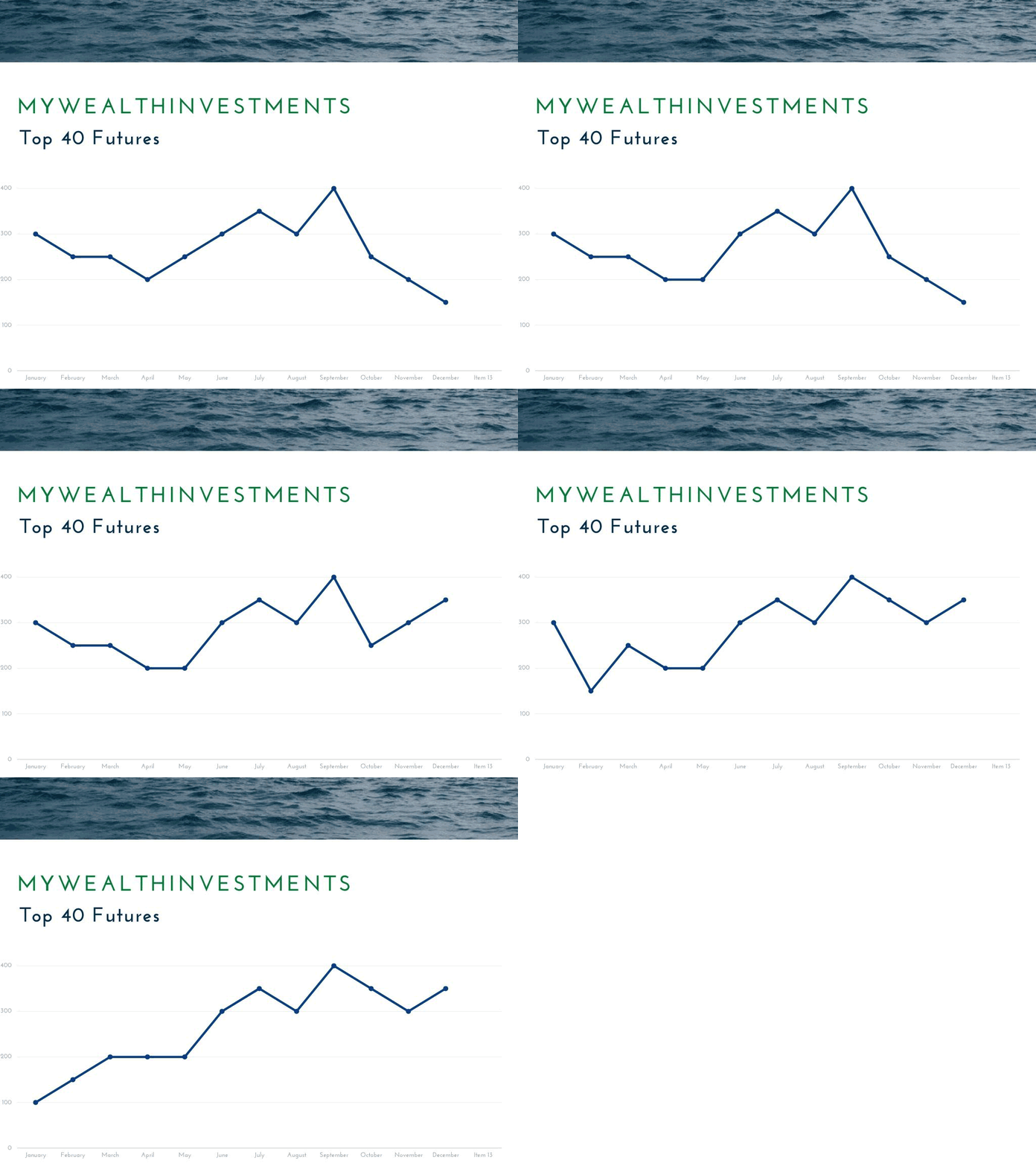
The Johannesburg Stock Exchange All-Share Index closed 0.6% higher at the 110 254 level.
In its audited results for the year ended 31 March 2026, Alexander Forbes reported a strong operational performance, with operating income increasing 10% to R4.85 billion and normalised profit from operations rising 22% to R1.03 billion. The growth was driven by higher assets under management, strong investment performance, sustained client retention and robust new business inflows across its investment and retail businesses. The group continued to strengthen its market position, with total assets under administration and management increasing 22% to R733 billion and active members under administration exceeding 1.3 million. Its investments division benefited from strong market conditions and new business growth, while the retail business delivered particularly impressive momentum, with new business increasing 39% to R36.5 billion and assets under advice growing 17% to R131 billion. Alexander Forbes maintained a very strong balance sheet, ending the year with a regulatory surplus of R1.19 billion and a capital cover ratio of 2.2 times, well above its target solvency ratio. The board declared a final dividend of 33 cents per share, resulting in a total annual dividend of 57 cents per share, up 4% from the previous year.
In a trading update from Novus Holdings Limited, the company said that it expects a meaningful decline in earnings for the year ended 31 March 2026, with earnings per share projected to fall by between approximately 19% and 29% compared to the prior year. The update further noted that headline earnings per share are expected to show a smaller decline of between 0% and 8%, reflecting a more stable underlying operational performance relative to the sharper drop seen in basic earnings. The decrease in earnings was largely attributed to once-off gains recognised in the prior year, including a bargain purchase gain of R16.3 million and a R51.1 million gain from an associate, which did not recur in the current period. Additionally, the current period was negatively impacted by an impairment of a related-party loan of R19.9 million
SA Economy:
South Africa recorded a much larger current account surplus in the first quarter of 2026, the highest in over four years, mainly due to stronger gold exports. The surplus increased to 2.4% of GDP, up from 0.6% in the previous quarter. In rand terms, the surplus rose sharply to 190.7 billion from 50.2 billion in the prior three months.
Manufacturing output fell by 2.9% year-on-year in April 2026, the biggest drop in a year, after increasing by a revised 1.5% in the previous month. The decline was mainly caused by weaker production in key sectors, including metals and machinery (-6%), wood and paper products (-10%), and vehicles and transport equipment (-11%). On a monthly basis, production also fell by 2.7%, reversing the earlier 1.2% increase. Over the three months to April, manufacturing output declined by 1.3% compared to the previous three-month period, showing ongoing weakness in the sector.
The SACCI business confidence index rose slightly to 124.1 in May from 123.6 in April, recovering from a seven‑month low. The improvement was mainly supported by stronger vehicle sales and higher exports, while imports also helped but to a lesser extent as businesses adjusted to higher oil prices caused by the Middle East conflict. However, confidence was held back by a drop in overseas tourists and ongoing concerns about rising inflation, which continue to weigh on business sentiment.
Mining production increased by 8.2% year-on-year in April 2026, rising from a 2.5% gain in the previous month, mainly due to a low base from last year. This marked the fifth month in a row of growth, supported by strong increases in platinum group metals (+36.5%), manganese ore (+19%), and chromium ore (+17.5%). However, some areas declined, including coal (-5.8%), copper (-13.1%), diamonds
(-17.1%), and other minerals. On a monthly basis, mining output rose by 3.3% after falling the month before. Over the three months to April, production increased by 2.4%, showing overall improvement in the sector despite mixed performance across different commodities.
Global Economy:
US producer prices rose by 1.1% in May 2026 from the previous month, the same as in April and higher than the expected 0.7%. The increase was mainly driven by a sharp rise in goods prices, which jumped 2.8%. A large part of this was due to a 23.4% surge in gasoline prices. Other energy and industrial products, including diesel, jet fuel, plastics, chemicals, and natural gas liquids, also increased, showing strong pressure on input costs. Core producer prices, which exclude food and energy, rose by 0.4% in May 2026 compared to the previous month. This was lower than April’s revised 0.7% increase and slightly below expectations of 0.5%, suggesting some easing in underlying price pressures.
The European Central Bank raised interest rates by 25 basis points, marking its first increase since 2023. The move shows the ECB’s commitment to bringing inflation back to its 2% target. The decision was mainly driven by rising energy prices and ongoing inflation risks linked to the Iran conflict, which has disrupted oil supplies through the Strait of Hormuz. The ECB noted that the Middle East war is adding to inflation pressures, and raising rates is necessary to manage these risks and support price stability in the eurozone.
The UK economy shrank slightly by 0.1% in April 2026 compared to the previous month, after growing by 0.3% in March. This was the first monthly decline since August last year. The drop was mainly caused by weaker services activity, especially in administrative services and leisure sectors, which seen notable declines. Retail activity also decreased, with overall trade falling as consumer spending weakened. However, this was partly offset by growth in the information and communication sector, which rose 1.1% and continued its steady upward trend.
Global Company:
The FTSE 100 closed 0.48% higher at 10 303. Banking shares led the way, with HSBC rising more than 2%, Standard Chartered up nearly 3.6%, and Lloyds and Barclays each gaining around 0.7%, while NatWest also moved higher. Mining companies also supported the index, with Rio Tinto, Glencore, Anglo American, Antofagasta, and Fresnillo all posting gains. Intertek rose over 1.5% after extending the deadline for takeover bids. Wizz Air reported slightly better-than-expected profit growth despite disruptions to Middle East routes, while Frasers Group made a €2 billion offer to buy the remaining stake in Hugo Boss.
The Hang Seng Index is trading 1.78% higher at 24 681, recovering from the previous session when it hit an 11‑month low. The rebound was supported by improved global sentiment as investors became more confident about a possible peace deal between the US and Iran after signs of progress in negotiations.
Easing geopolitical tensions also pushed oil prices down to two‑month lows, which helped boost investor appetite for riskier assets and supported sectors sensitive to fuel costs. Gains were led by financial, technology, and retail stocks, while the communication sector saw a slight decline. Among the top performers were AIA (+1.4%), SMIC (+3.3%), Kingboard (+4.4%), Lenovo (+2.2%), Knowledge Atlas (+7.3%), and Dongyue (+10.0%).
In China, the Shanghai Composite is up 1.35% at 4 041.
The Dow Jones Industrial Average closed 1.83% higher at 50 848, while the S&P 500 closed 1.72% higher at 7 394. Technology stocks led the rally as investors positioned ahead of SpaceX’s expected IPO. Chipmakers performed especially well, with Micron rising 11%, AMD up 8%, Lam Research gaining 12.7%, and Intel jumping over 10% after a positive upgrade. However, not all tech stocks gained, Oracle fell nearly 9% despite strong earnings, as investors focused on weaker cloud revenue and rising costs related to AI infrastructure.
Commodities:
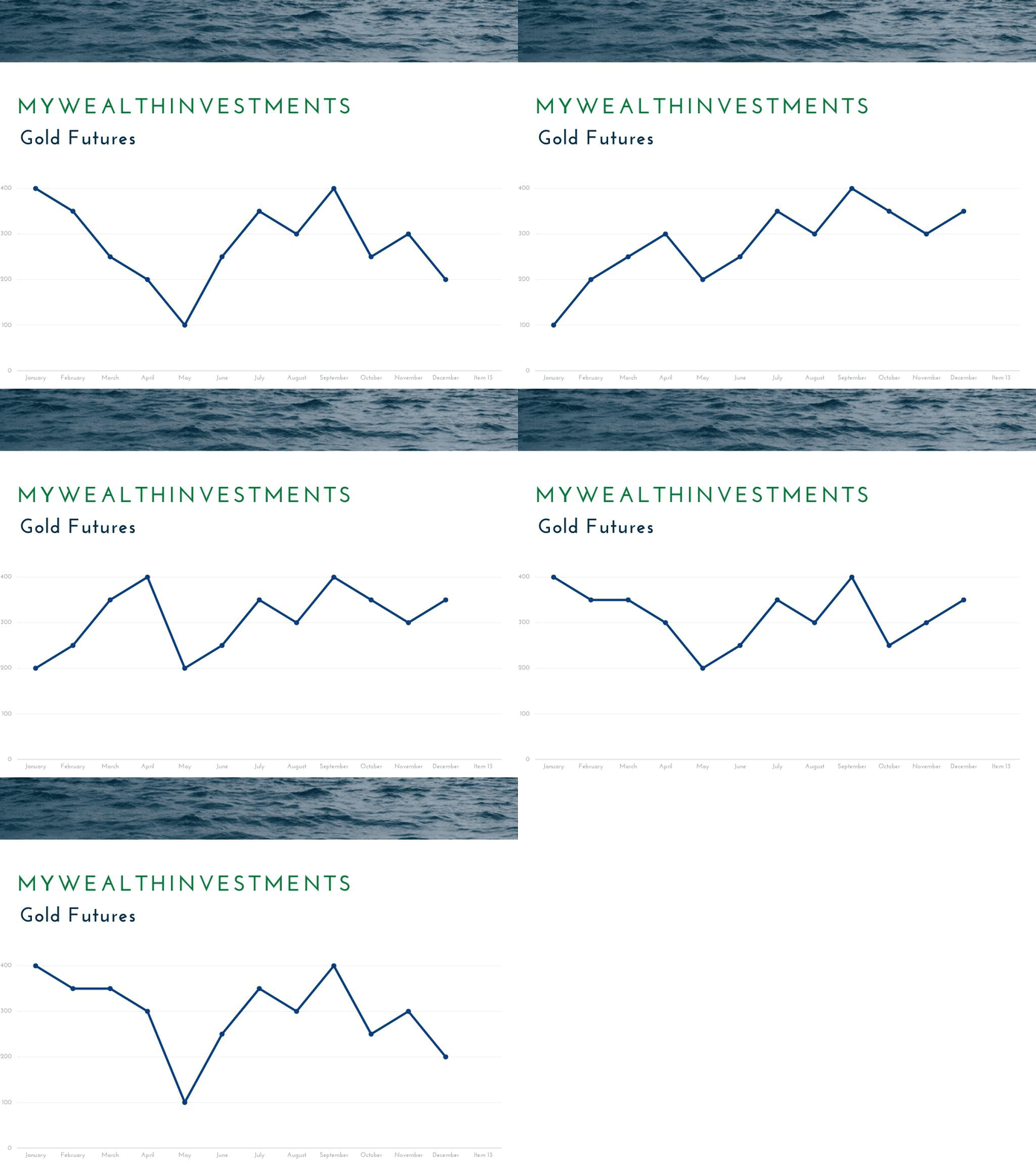
Gold is trading higher by 1.99% at $4 179/oz, while Platinum is higher by 2.98% to $1 728.25/oz.
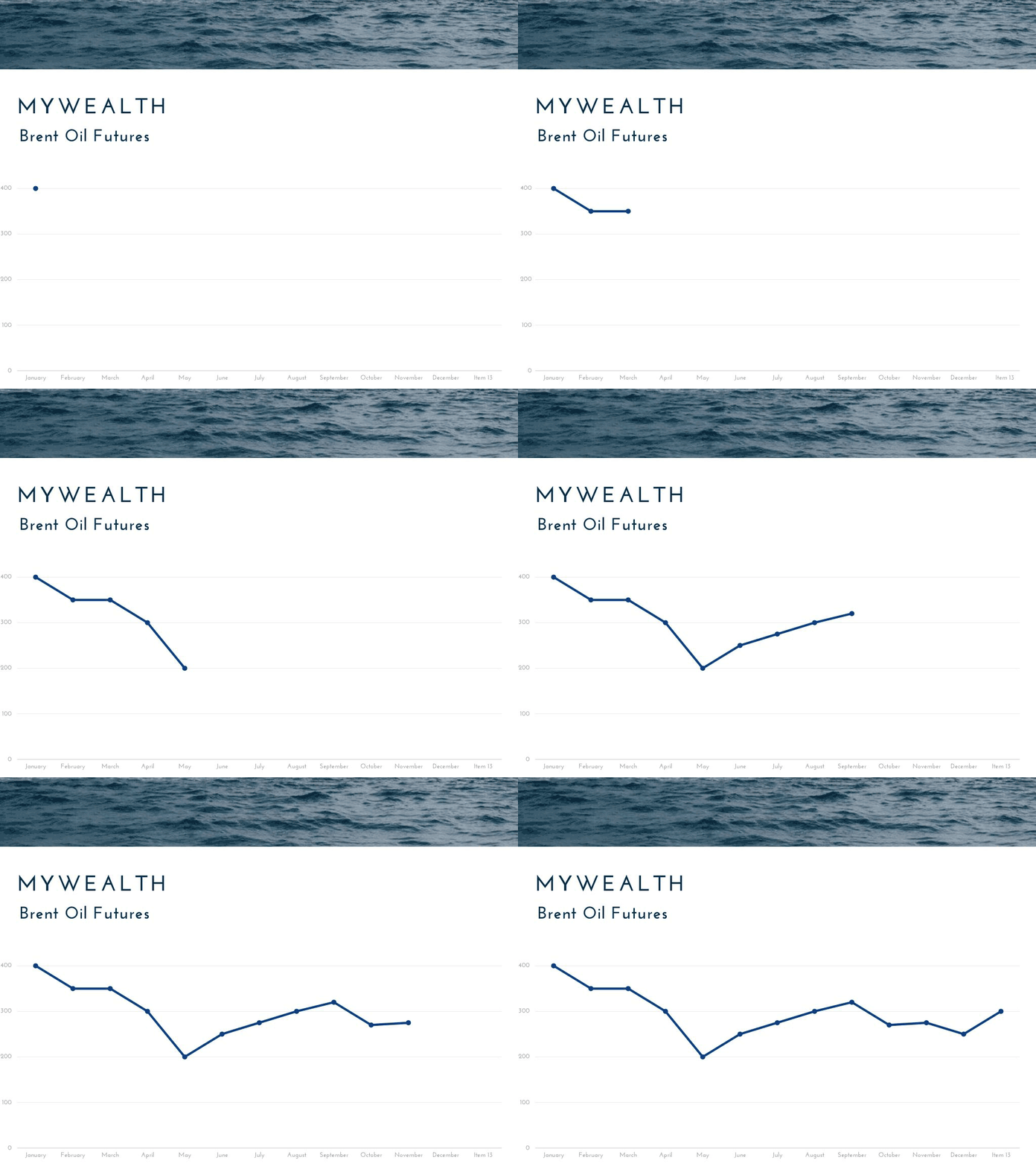
Brent crude was 6.18% lower at $88.25 a barrel, hitting its lowest level in nearly two months after President Donald Trump said a peace agreement with Iran could be reached as early as this weekend.
Currency:
The rand traded at R16.32 against the US Dollar, R21.87 against British Pound and R18.87 against the Euro.
The Euro is slightly firmer against the US Dollar to trade at $1.1563.
 .
.
| Market Indicators | |||||||
| Commodities $ | Cross Currencies ($) | Major Indices | |||||
| Gold | 4179.00 | 1.99% | USD/ZAR | 16.32 | Top40 | 102315.02 | 0.64% |
| Platinum | 1728.25 | 2.98% | GBP/ZAR | 21.87 | Dow 30 | 50848.75 | 1.83% |
| Brent | 88.25 | -6.18% | EUR/ZAR | 18.87 | S&P 500 | 7394.30 | 1.72% |
| Copper | 6.39 | 2.50% | EUR/USD | 1.1563 | FTSE | 10303.88 | 0.48% |
| Palladium | 1290.80 | 2.94% | USD/JPY | 160.30 | DAX | 24209.71 | 0.06% |
| Iron Ore | 101.55 | 0.39% | BITCOIN | 63355.00 | Shanghai | 4041.77 | 1.35% |
| Source: FACTSET | |||||||