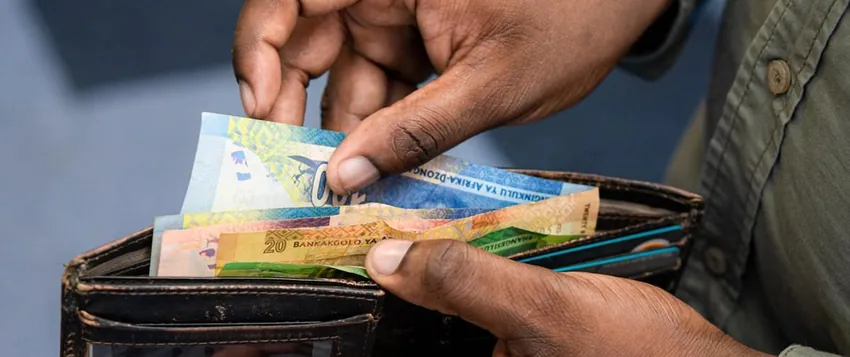
An unexpected R10,000 can make a meaningful difference to your finances, although what it ultimately does for your financial position depends on how you choose to use it. Whether it comes from an annual bonus, a tax refund, an inheritance or an unexpected payment, there is often a temptation to treat the money as something extra, separate from the income we rely on to cover our usual expenses. Using it to upgrade a phone, book a weekend away or finally buy something we have been putting off can feel entirely reasonable, but before spending it, consider whether the money could make a more lasting difference to your financial well-being.
Where the money will have the greatest impact depends largely on your existing circumstances, because someone carrying expensive credit card debt is in a very different position from someone who has no debt. If you owe R10,000 on a credit card charging 20% interest a year, for example, settling that balance could save you approximately R2,000 in interest over the following year, assuming the balance would otherwise remain outstanding for that period and excluding fees and compounding. That is a relatively predictable saving, unlike investment returns, which can fluctuate and may be negative over shorter periods. However, using every cent to settle debt may not be sensible if it leaves you without enough money to cover an unexpected expense, potentially forcing you to borrow again when another bill arrives.

If you have little or no emergency savings, building a financial buffer may be the more pressing priority. An unexpected car repair, medical expense or temporary loss of income can quickly put pressure on a household budget when there is no money available to cover it, often resulting in expensive borrowing. Putting some or all of the R10,000 into an interest-bearing savings account or another suitable, accessible cash investment may therefore be more valuable than committing it to a long-term investment. A commonly used guideline is to work towards three to six months of essential living expenses, although the appropriate amount depends on factors such as income stability, household responsibilities and how predictable your expenses are. The purpose of this money is not to maximise returns, but to ensure that it is available when you need it.

Once expensive debt is under control and you have sufficient emergency savings, investing becomes a more compelling option, particularly if you are working towards longer-term financial goals. An additional contribution towards retirement savings, a diversified investment portfolio or a tax-free investment account can help you build wealth over time. In South Africa, qualifying tax-free investments offer the benefit of exempt investment returns, including interest, dividends and capital gains, subject to applicable rules and contribution limits. Retirement contributions may also qualify for tax deductions where the relevant requirements are met, although retirement investments generally come with restrictions on access. Tax-free investments offer greater flexibility, but the underlying investments still carry risk, making it important to consider when you might need the money before deciding where to invest.
Your investment time horizon matters just as much as the investment itself. Money intended for a property deposit in the next year or two should generally be managed differently from money that can remain invested for another ten or twenty years, since a market downturn shortly before you need the funds could force you to sell at an unfavourable time. A longer investment horizon provides more opportunity to withstand market fluctuations, although it does not guarantee positive returns. Before investing a windfall, consider what the money is intended for, how much risk you can reasonably afford to take and whether the investment fits into your broader financial plan.

Financial planning should not, however, become an exercise in saving and investing every available cent at the expense of enjoying the money you earn. Money also allows us to create meaningful experiences, support people we care about and spend on things that improve our quality of life. Using a portion of a windfall for something enjoyable is perfectly reasonable, provided that it does not undermine more pressing financial priorities. You might, for example, use R5,000 to reduce expensive debt, put R3,000 towards emergency savings and spend the remaining R2,000 on something you have been wanting. Someone with no debt and a healthy emergency fund might instead invest most of the amount, but ultimately the proportions matter less than making the decision deliberately.
In the end, an unexpected payment is an opportunity to make progress towards the things that matter to you financially, whether that means reducing debt, building a safety net, investing for the future or allowing yourself something you can enjoy without guilt. The best use of the money depends on what your finances need most at this stage of your life, rather than on a rule that says every spare rand must be invested or that unexpected money should be spent immediately. Taking the time to decide before the money disappears into everyday expenses can turn a once-off payment into a lasting improvement in your financial well-being.