
SA Company News:
The Johannesburg Stock Exchange All-Share Index closed 0.33% lower at the 119 353 level as resource stocks weighed on the market. Resources fell 1.27%, dragged lower by declines in precious‑metal miners, with Gold Fields down 2.7% and AngloGold Ashanti off 3%. In contrast, Financials edged up 0.11%, supported by a 1.12% gain in life insurers, while Industrials rose 0.15%, helping to limit broader losses.
Ninety One reported assets under management (AUM) of £171.8 billion as at 31 March 2026, up sharply from £130.8 billion a year earlier and £159.8 billion at the end of December 2025. The increase includes £16.5 billion of AUM transferred from Sanlam Investment Management’s active asset management business in South Africa, which moved to Ninety One with effect from 1 February 2026. The firm said that they will publish its full‑year results for the year ended 31 March 2026 on 3 June 2026.
SA Economy:
Economic activity picked up in March, with the PayInc index rising 0.9% month on month to 104.7 points, 4.6% higher year on year, while transaction volumes increased 13.4% y/y to 195.5 million and the nominal value of electronic payments surged to R1.475 trillion. However, this improvement faces mounting risks from the Middle East conflict, which has disrupted oil markets and led the IMF to downgrade South Africa’s 2026 growth forecast to 1% and global growth to 3.1%. The impact is already visible in fuel prices, with petrol increasing by R3.06/litre in April and diesel by R7.37/litre, with further hikes expected in May. As these are likely to push inflation up to around 4.5%, well above the SARB’s 3% target, the Reserve Bank has kept the repo rate unchanged at 6.75%, reducing the likelihood of further interest‑rate cuts in 2026.
Global Economy:
Eurozone industrial production rose by 0.4% in February 2026, beating expectations and snapping two months of declines. The improvement was driven by strong rebounds in non‑durable consumer goods (2.6% vs. -5.0% in January), capital goods (1.0% vs. -1.7%), and intermediate goods (0.5% vs. -1.4%). However, energy output declined by 2.1% (compared to a 5.5% increase in January), and durable consumer goods continued to fall for the fourth straight month (-1.3% vs. -1.0%).
China’s economy grew 5% year‑on‑year in the first quarter, beating expectations of 4.8% and improving from 4.5% in Q4. Growth was broadly steady on a quarterly basis at 1.3%, just slightly below forecasts, showing resilience despite the Middle East conflict. The stronger‑than‑expected outcome puts China comfortably on track to meet its lower 2026 growth target of 4.5%–5.0%, giving policymakers some breathing room and reducing the immediate need for additional stimulus, even though underlying activity data remain mixed.
China’s retail sales rose 1.7% year-on-year in March 2026, slowing from a 2.8% increase in the January–February period and falling short of market expectations of a 2.3% gain.
US import prices rose 0.8% month‑on‑month in March 2026, slightly slower than February’s 0.9% increase and well below expectations of a 2% jump. The rise was driven mainly by higher fuel prices, which climbed 2.9%, while non‑fuel import prices increased 0.6%. On an annual basis, import prices were 2.1% higher, marking the largest year‑on‑year increase since December 2024 and highlighting rising cost pressures linked largely to energy prices.
UK economic growth picked up strongly in February 2026, with GDP expanding by 0.5% month‑on‑month, up from a revised 0.1% increase in January and marking the fastest pace since January 2024. The improvement was broad‑based. The services sector grew 0.5%, driven mainly by a sharp rebound in administrative and support services, particularly employment activities, alongside solid gains in wholesale and retail trade. These gains were partly offset by a modest decline in accommodation and food services.
Global Company:
The FTSE 100 closed 0.47% lower at 10 559, led by Rolls‑Royce and GSK, which both fell more than 2%. Rio Tinto slipped 0.8%, while Shell and BAT dropped around 0.7%, and AstraZeneca and BP eased about 0.5%. Burberry also fell nearly 2% after weak results from luxury peers weighed on the sector. Antofagasta edged up 0.5% after reaffirming its production guidance and highlighting positive medium‑term copper fundamentals. Entain gained more than 4.5%, supported by ongoing acquisition‑related developments.
The Hang Seng Index is trading 1.49% higher at 26 336, as investor sentiment improved on growing optimism around possible US–Iran ceasefire talks, which helped reduce geopolitical fears. Gains were broad‑based, led by technology, financial and consumer stocks. Buying interest in heavyweight names supported the advance, including Tencent Holdings (+1.5%), AIA Group (+1.5%), Kuaishou Technology (+1.2%), Pop Mart International (+1.5%), and Meituan (+0.6%), reflecting the improved global backdrop and stronger risk appetite.
In China, the Shanghai Composite is up 0.38% at 4 042, hitting a fresh one-month high.
The Dow Jones Industrial Average closed 0.15% lower at 48 463, while the S&P 500 closed 0.79% higher at 7 022 to a new record close.
Technology shares led the gains. Microsoft surged 4.6%, marking its best daily performance in nearly a year. Tesla jumped 6.7%, its largest one‑day percentage gain since November 2025.
In earnings news, Bank of America reported a 17% increase in profits, lifting its shares 1.8%, while Morgan Stanley also posted strong results, supporting sentiment around the financial sector. Carrier Global was the worst performer in the S&P 500, falling more than 10%, while Robinhood Markets soared 10.4%, the biggest gainer in the index.
Commodities:
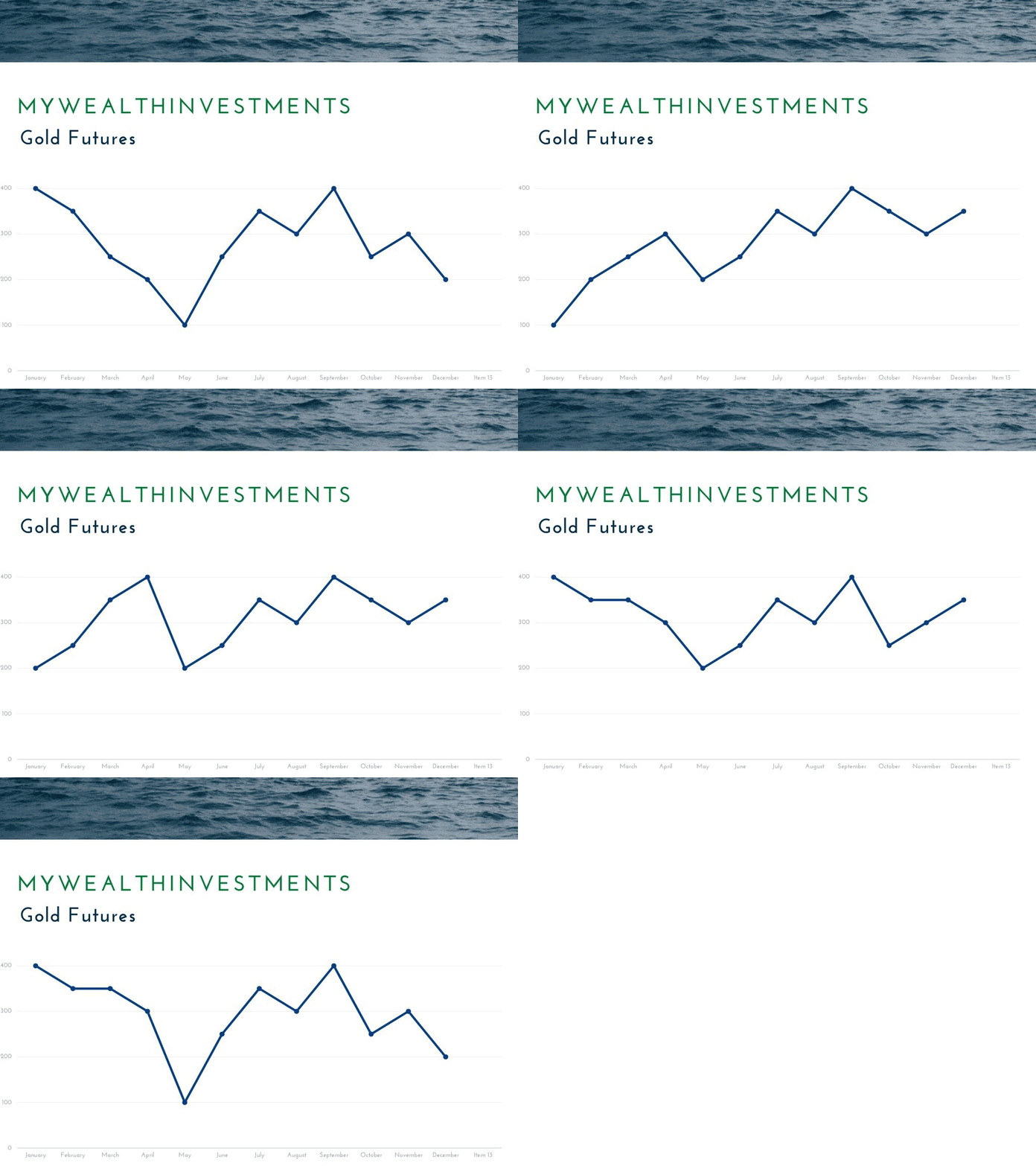
Gold is trading higher by 0.12% at $4 825/oz, while Platinum is higher by 1.38% to $2 144.60/oz.
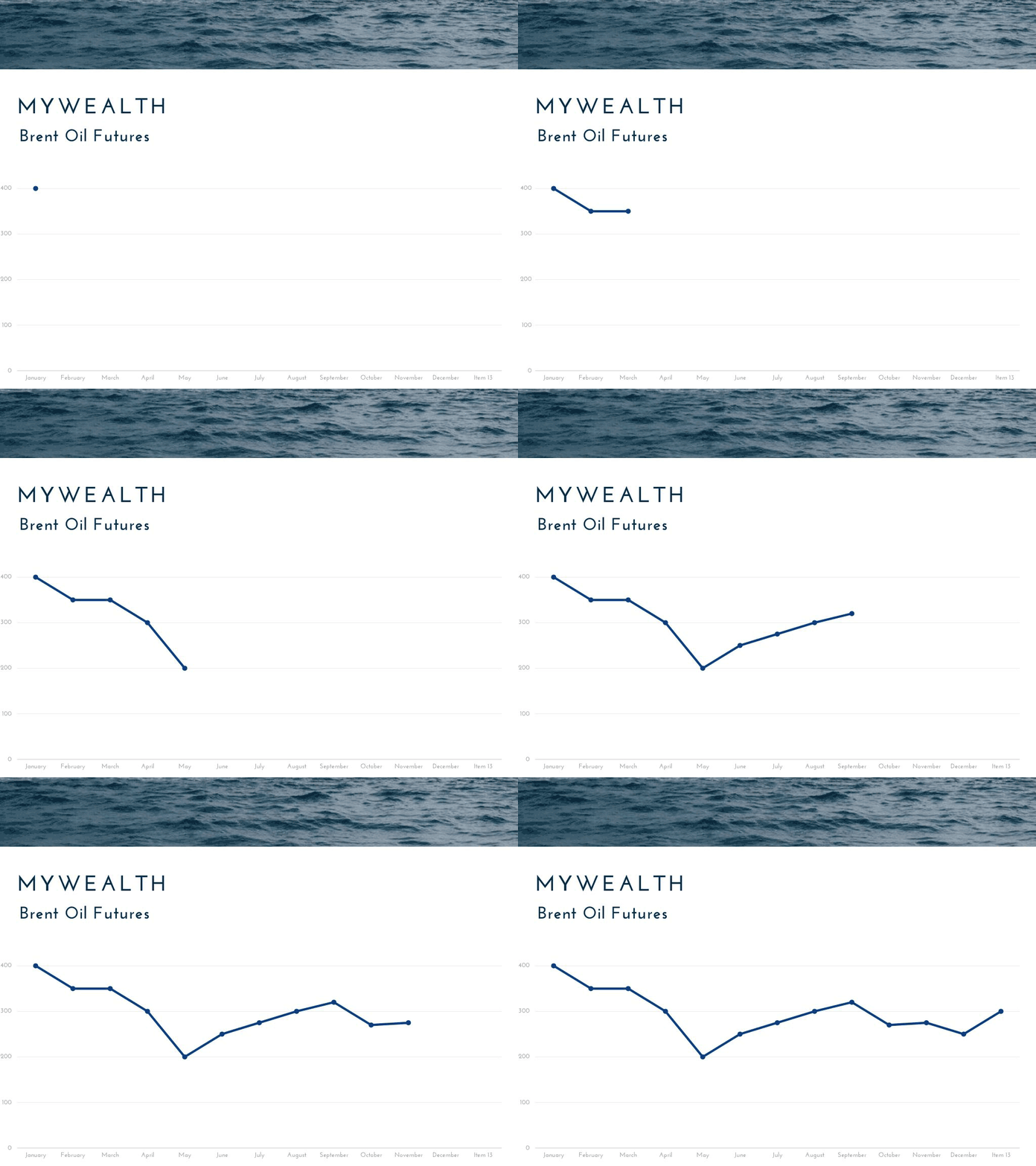
Brent crude was 3.09% lower at $90.09 a barrel, as markets weighed the possibility of an extension to the US–Iran ceasefire against ongoing risks to global energy supply. Investor focus has shifted to signs that Washington and Tehran may prolong their two‑week ceasefire to create more time for negotiations aimed at ending the conflict and reopening the Strait of Hormuz. Despite the ceasefire talks, the strait remains effectively closed, with a US naval blockade on Iranian ports still in place. This has kept markets on edge over the risk of further supply disruptions. Tensions remain high after Iran warned that if the blockade is extended, it could halt shipments across key routes, including the Persian Gulf, Sea of Oman, and Red Sea. Attention is now turning to a likely second round of US–Iran talks, expected to focus on reopening the Strait of Hormuz and addressing Iran’s nuclear enrichment activities. Until there is clarity on these negotiations, oil markets are likely to remain sensitive to geopolitical developments.
Currency:
The rand traded at R16.33 against the US Dollar, R22.15 against British Pound and R19.27 against the Euro.
The Euro is slightly firmer against the US Dollar to trade at $1.1806.
 .
.
| Commodities $ | Cross Currencies ($) | Major Indices | |||||
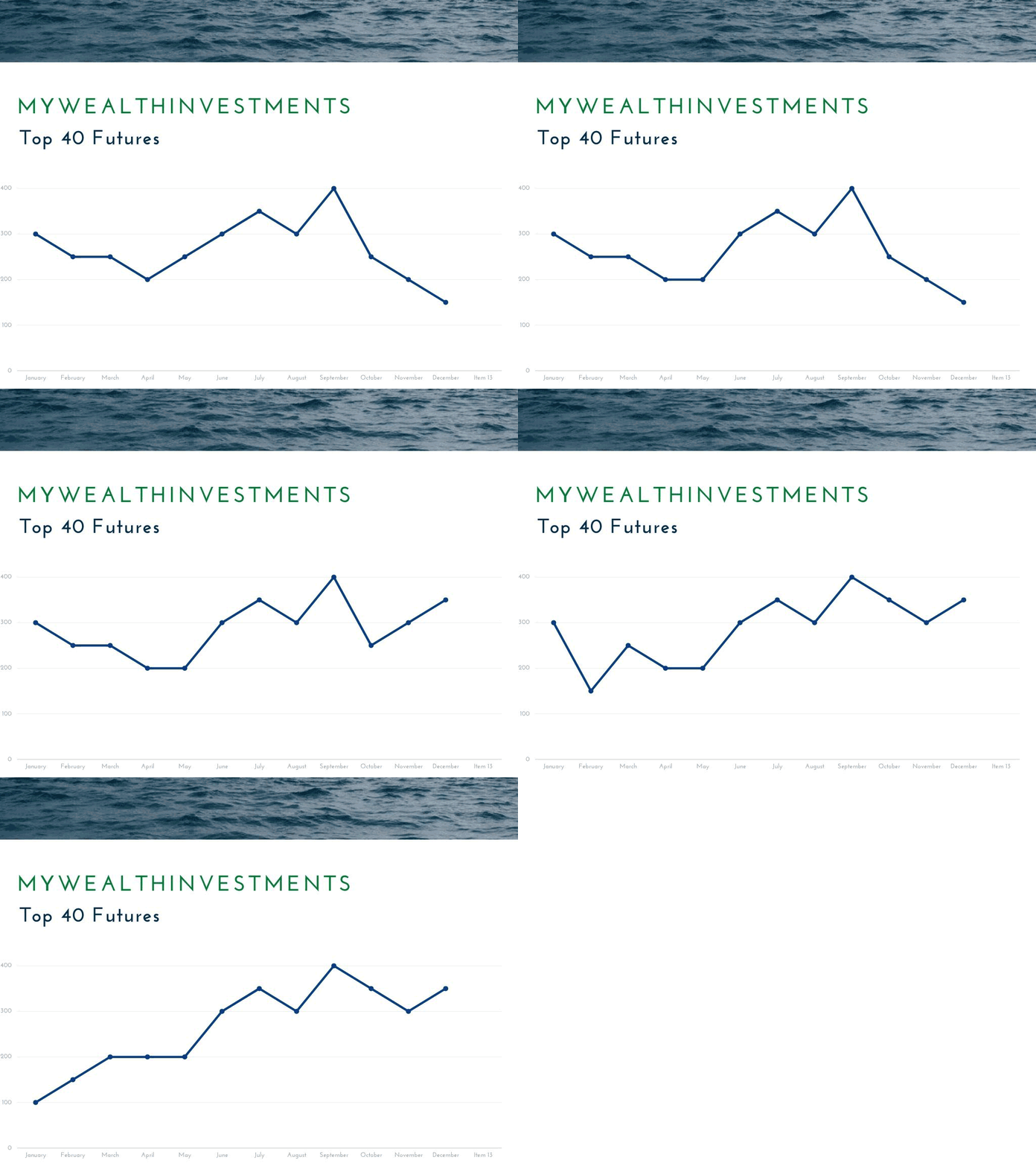
| Gold | 4825.65 | 0.12% | USD/ZAR | 16.33 | Top40 | 111527.10 | -0.37% |
| Platinum | 2144.60 | 1.38% | GBP/ZAR | 22.15 | Dow 30 | 48463.72 | -0.15% |
| Brent | 95.00 | -0.33% | EUR/ZAR | 19.27 | S&P 500 | 7022.92 | 0.79% |
| Copper | 6.12 | 0.49% | EUR/USD | 1.1806 | FTSE | 10559.58 | -0.47% |
| Palladium | 1594.75 | 0.05% | USD/JPY | 158.84 | DAX | 24066.70 | 0.09% |
| Iron Ore | 105.15 | 1.24% | BITCOIN | 75090.00 | Shanghai | 4042.48 | 0.38% |
| Source: FACTSET | |||||||