
SA Company News:
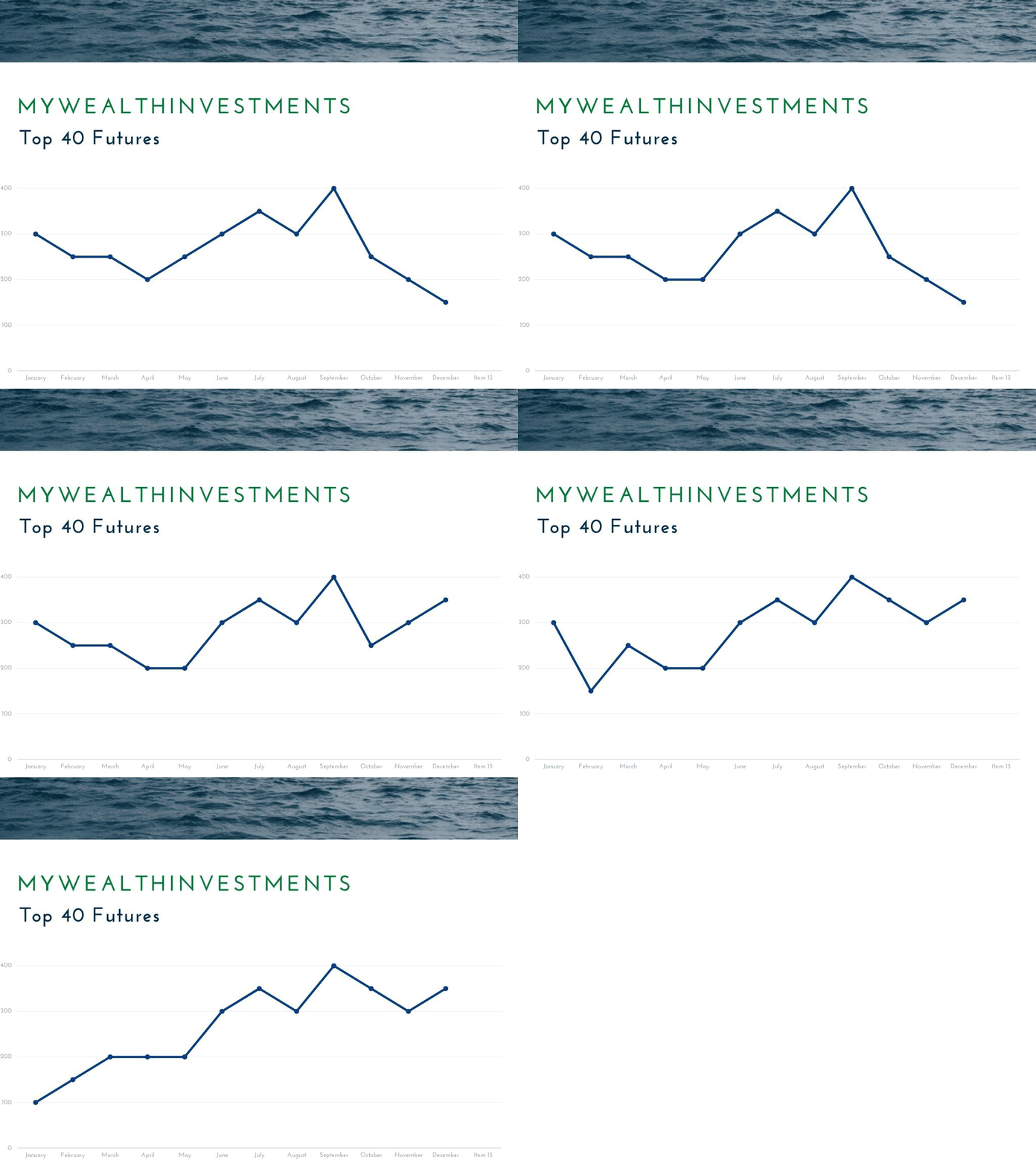
The Johannesburg Stock Exchange All-Share Index closed 0.65% higher at the 110 110 level.
Kumba Iron Ore delivered resilient results in a difficult operating and market environment for the period ended 30 June 2026, reporting EBITDA of R10.9 billion and maintaining a strong EBITDA margin of 35%. However, revenue declined 11% to R30.9 billion, while earnings per share fell by about 42%, reflecting lower production, weaker market conditions and rising cost pressures. Despite these headwinds, the company maintained a strong balance sheet, ending the period with net cash of R12.1 billion and generating R10.1 billion in cash from operations. Kumba also produced R1.9 billion in attributable free cash flow, demonstrating continued financial discipline and cash generation. The board declared an interim cash dividend of R7.90 per share, amounting to approximately R2.5 billion in distributions to shareholders. Operationally, Kumba highlighted progress on its sustainability and value-creation objectives, including more than a decade of fatality-free production at Sishen, the introduction of wheeled renewable electricity at Kolomela, increased female workforce participation to 32%, and the creation of R24 billion in shared value for stakeholders during the period.
In a trading update from Merafe Resources, the company said that it expects a strong improvement in first-half earnings, forecasting headline earnings per share (HEPS) of 19.5 to 22.0 cents, compared with 12.6 cents in the first half of the previous year. The anticipated increase is mainly due to higher commodity prices and stronger sales volumes during the period, which more than offset production challenges. Despite the improved earnings outlook, operational performance was mixed. Attributable ferrochrome production from the Glencore Merafe Chrome Venture declined 75% year-on-year to 28 000 tonnes, largely due to the suspension of production at the Wonderkop and Boshoek smelters, as well as a partial suspension at the Lion smelter during the reporting period. Attributable chrome ore production fell by approximately 4% year-on-year to 425 000 tonnes, while attributable platinum group metals (PGM) concentrate production decreased by around 5% to 6,700 ounces. The decline in PGM output was mainly attributed to lower primary mine production and changes in the feed mix.
SA Economy:
The sugar industry is warning that a sharp increase in low-cost sugar imports is threatening the survival of local producers, with imports during the first five months of 2026 nearly doubling year-on-year and displacing locally produced sugar from the domestic market. Industry representatives argue that the current tariff system no longer reflects global market realities and are urging government to accelerate its review of import protections. The surge in imports has led to a significant decline in local sugar sales, with sales between April and June falling by more than 45 000 tonnes compared with the previous year. The industry estimates that nearly 175 000 tonnes of local sales have been lost over the past few seasons, placing increasing financial pressure on growers and millers. Industry bodies contend that much of the imported sugar originates from countries such as Brazil, India and Thailand, where producers benefit from subsidies and support mechanisms that enable them to export sugar at prices below the production costs faced by farmers. This has further reduced the profitability of local sugar production and contributed to lower expected sugar prices for producers this year.
Global Economy:
Germany’s Ifo Business Climate Index rose to 86.6 in July 2026, marking a third consecutive monthly increase and slightly exceeding market expectations of 86.
The CBI retail sales balance improved to -26 in July 2026 from -54 in June, well above market expectations of -45, signaling the smallest decline in UK retail sales in six months.
US durable goods orders rose 0.3% in June 2026 to $334.8 billion, rebounding from May’s 4% drop but below the 1.6% forecast. Ex-transportation, orders increased 0.6%. Core capital goods (non-defense ex-aircraft), a key investment gauge, climbed 0.9% after a revised 1.9% gain, driven by strong AI-related and defense spending.
Global Company:
The FTSE 100 closed 0.42% higher at 10 781. Vodafone gained nearly 5% after reporting organic service revenue growth, which exceeded market expectations and maintaining a positive outlook for the remainder of the year. AstraZeneca rose 1.7% after delivering better-than-expected quarterly earnings and reaffirming both its full-year guidance and long-term 2030 targets. Other defensive stocks also performed well, with GSK advancing more than 2%, while Unilever and BAE Systems posted gains as investors favoured quality large-cap names.
In contrast, energy stocks came under pressure as oil prices weakened. BP fell 2.6%, while Shell declined 0.9%. Mining stocks also lagged the broader market, with Glencore down 3.4%, Anglo American losing 2.4%, and Antofagasta falling 1.9%.
Asian markets are trading lower as renewed selling pressure swept through semiconductor stocks. The sector came under pressure as growing investor concerns over whether massive AI investments will generate sufficient returns weighed on chipmakers.
The Hang Seng Index is trading 0.26% lower at 25 142.
In China, the Shanghai Composite is down 1.41% at 3 804.
The Dow Jones Industrial Average closed 0.5% higher at 52 210, while the S&P 500 closed 0.02% higher at 7 413. Fresh concerns over the sustainability of AI-related investment spending continued to weigh on semiconductor stocks, as investors questioned whether major technology companies, known as hyperscalers, will maintain their aggressive spending on artificial intelligence infrastructure. Market concerns have grown that some AI investments may be supported by interconnected financing and spending arrangements, which could come under pressure if large technology firms begin to reduce capital expenditure. As a result, several chipmakers posted sharp losses. Nvidia fell 5.0%, AMD declined 5.2%, Micron Technology slipped 2.3%, SK Hynix dropped 7.5%, and SanDisk plunged 11.0%.Investors are now closely focused on upcoming earnings reports from major technology companies, including Amazon, Meta Platforms, Microsoft, and Apple, which are expected to provide important insights into future spending plans for AI infrastructure and data centres.
Commodities:
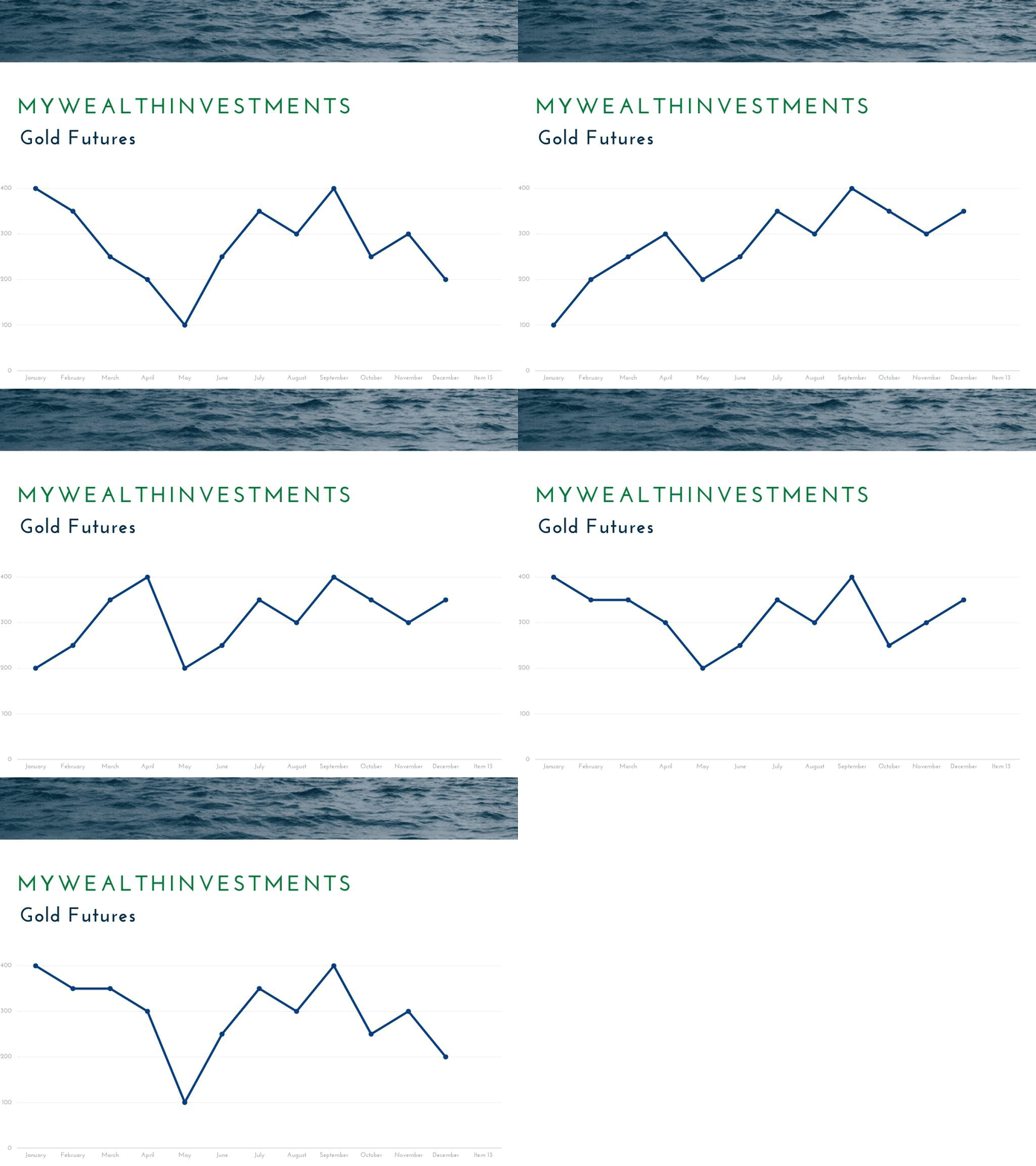
Gold is trading lower by 1.15% at $4 042/oz, giving back the previous session’s gains amid lingering concerns that the Federal Reserve could raise interest rates this week, while Platinum is lower by 1.02% to $1 604.55/oz.
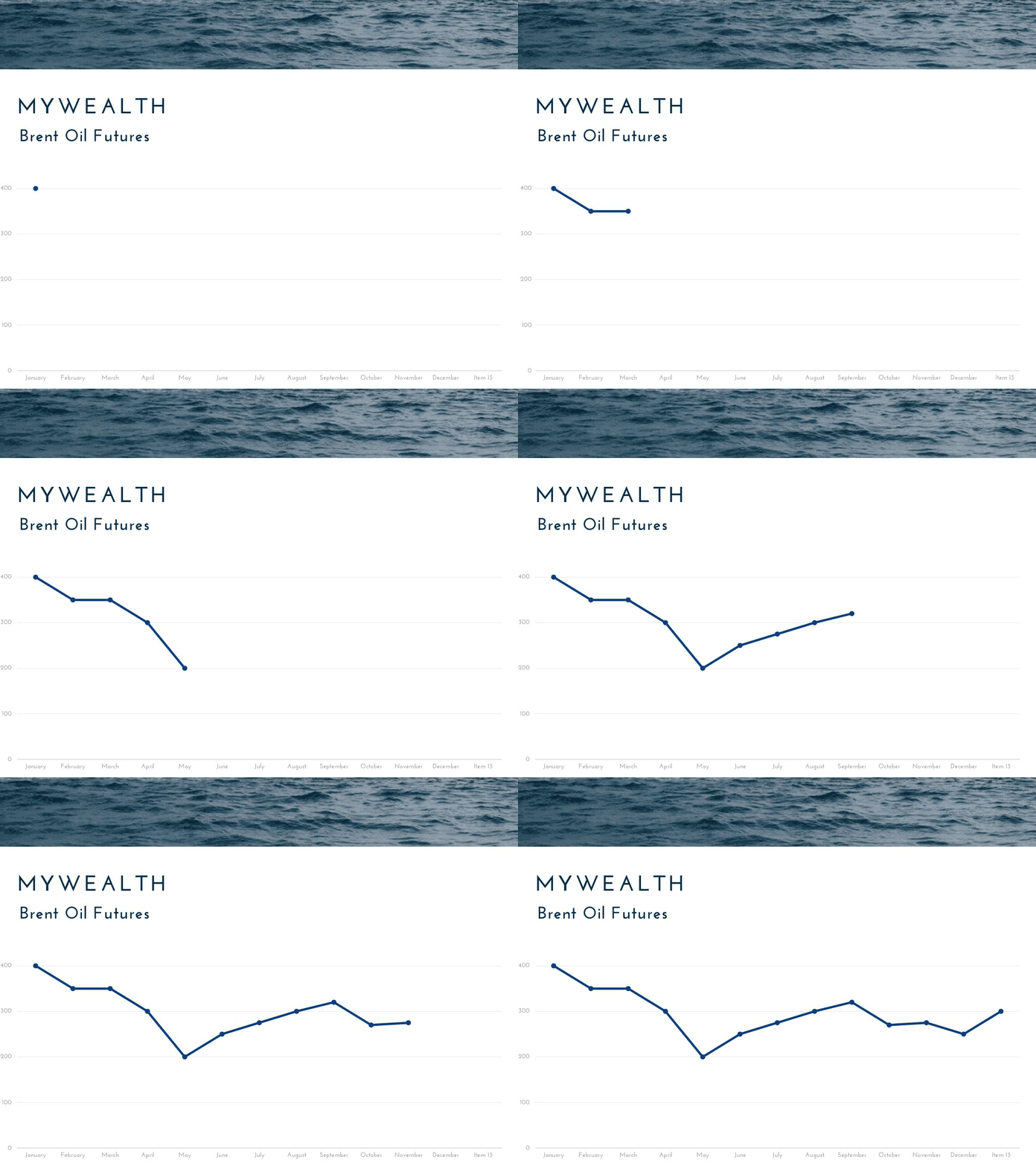
Brent crude was 5.28% lower at $87.48.
Currency:
The rand traded at R16.81 against the US Dollar, R22.34 against British Pound and R19.11 against the Euro.
The Euro is slightly weaker against the US Dollar to trade at $1.1365.
 .
.
| Market Indicators | |||||||
| Commodities $ | Cross Currencies ($) | Major Indices | |||||
| Gold | 4041.85 | -1.15% | USD/ZAR | 16.81 | Top40 | 102102.83 | 0.66% |
| Platinum | 1604.55 | -1.02% | GBP/ZAR | 22.34 | Dow 30 | 52210.08 | 0.50% |
| Brent | 87.48 | -5.28% | EUR/ZAR | 19.11 | S&P 500 | 7413.18 | 0.02% |
| Copper | 6.33 | -0.32% | EUR/USD | 1.1365 | FTSE | 10781.75 | 0.42% |
| Palladium | 1271.00 | 0.25% | USD/JPY | 163.73 | DAX | 25361.03 | 1.03% |
| Iron Ore | 98.05 | -0.05% | BITCOIN | 63498.60 | Shanghai | 3804.60 | -1.41% |
| Source: FACTSET | |||||||